

By Donna Monthei, RDN, LD | Originally Published: April 21, 2026 | Medically Reviewed on June 19, 2026
Constipation is a common, uncomfortable condition that affects millions of Americans, making it difficult or painful to pass stool. When you are “backed up,” you may experience fewer than three bowel movements per week, feel like you haven’t fully emptied your bowels, or deal with dry, hard stools that resemble small pellets.
Beyond the physical discomfort of bloating and cramping, chronic constipation is often a signal that your gut microbiome is out of balance. By understanding the triggers and utilizing functional tools, you can move from “stuck” to “steady.”
What is Stopping Your Go?
Several factors can disrupt the delicate balance of your digestive system:
1. Gut Dysbiosis
Your gut is home to trillions of microorganisms that support regular motility. When this balance is disrupted—often by antibiotics—the beneficial bacteria that produce short-chain fatty acids (SCFAs) like butyrate are reduced. These SCFAs are the “fuel” for your colon cells and are essential for stimulating the muscle contractions needed for a bowel movement. Read more about why we use gut microbiome testing to optimize gut health here.
2. The Fiber and Water Deficit
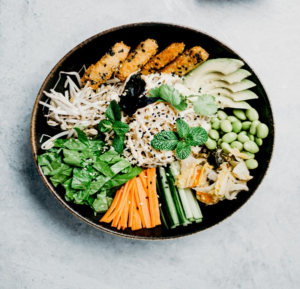
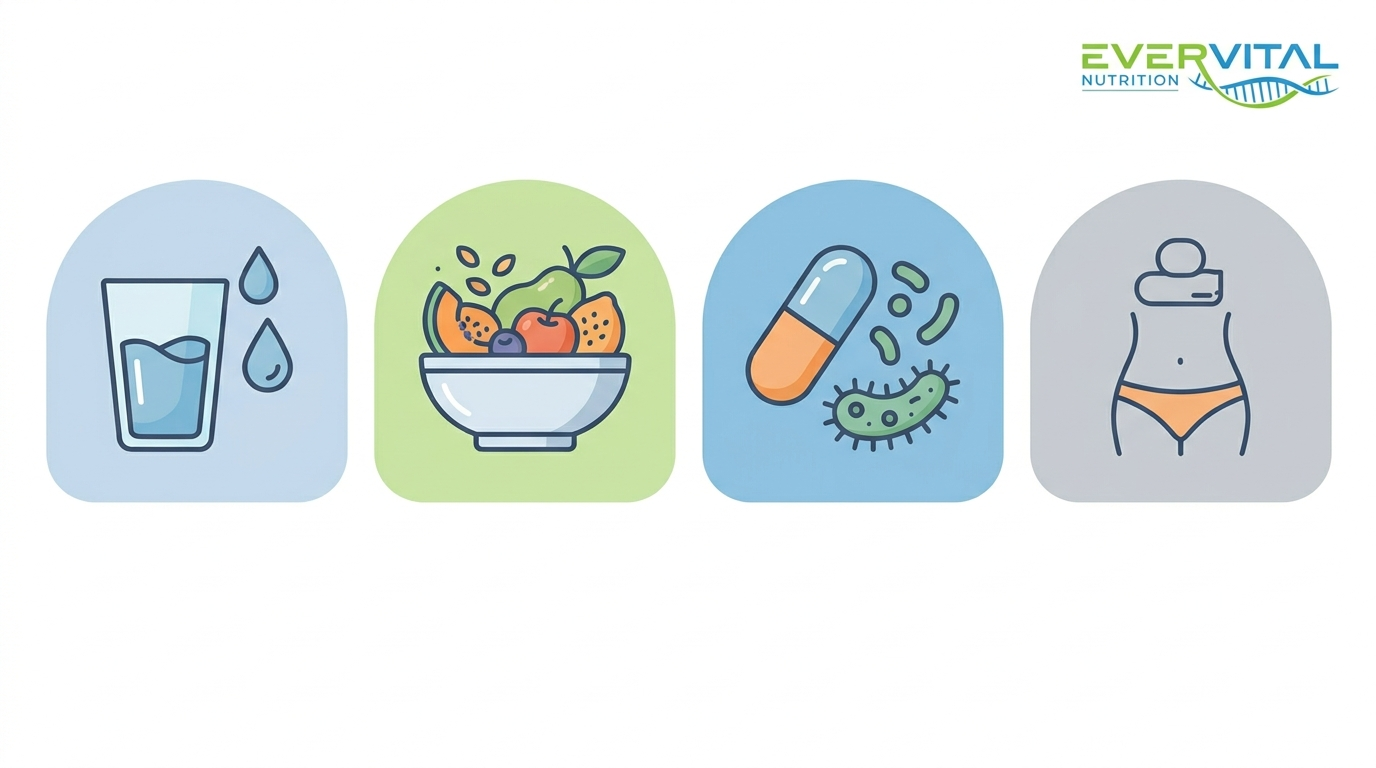
Fiber speeds up the movement of food and adds necessary bulk to the stool. Without enough insoluble fiber (found in whole grains, nuts, and seeds), your gut bacteria lack the fuel they need to keep things moving. Furthermore, without adequate hydration, your stool becomes hard and difficult to release. Read more about the types of fiber and where to get it here.
3. The Medication Factor (The GLP-1 Connection)
Various medications can interfere with gut transit time. Notably, GLP-1 agonists (commonly used for weight loss and diabetes), narcotics/opioids, and antidepressants can slow down gastric emptying and intestinal transit, leading to significant sluggishness. Read more about GLP-1 strategies to reduce constipation here and here.
Can functional remedies help GLP-1 users? Yes. While GLP-1s change the speed of digestion, supporting the body with adequate hydration (8–10 cups/day), insoluble fiber, and motility-boosting probiotics can help mitigate these side effects.
The Role of Probiotics
While we aren’t here to sell you a bottle, it is important to acknowledge that probiotics can be powerful allies. The right strains can increase stool frequency, reduce the time it takes for waste to move through you, and produce the SCFAs needed for a strong gut barrier.
Key strains to look for include:
- Bifidobacterium lactis: Known to accelerate digestion and enhance comfort in those with mild constipation.
- Akkermansia muciniphila: Supports gut barrier integrity by nourishing the protective mucin layer. This is a picky organism and will not grow in the presence of inflammation.
- Clostridium butyricum: A powerhouse for producing butyrate directly in the colon.
Your Daily Action Plan for Regularity
To enhance your digestive health, consider these lifestyle adjustments:
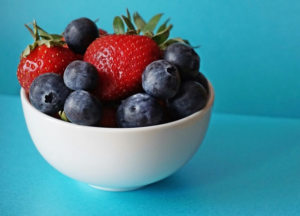
- Eat Your “P” Fruits: Prunes, peaches, and pears are high in sorbitol and polyphenols, which naturally soften stool and stimulate gut motility.
- The Two-Kiwi Rule: Incorporating two kiwis into your daily diet has been clinically shown to improve bowel regularity.
- Avoid Slower-Digesting Fats: Foods high in saturated fats (like processed meats and fried foods) are digested more slowly and can exacerbate backup.
- Mind Your Pelvic Floor: Constipation can sometimes be caused by weak or uncoordinated pelvic floor muscles, making it difficult to pass stool even when you feel the urge.
Expert Additions for Extra Relief
- The “Squatty Potty” Position: Elevating your knees above your hips mimics a natural squatting position, which unkinks the puborectalis muscle and allows for an easier exit. Pro Tip: elevating your feet on a small trashcan creates the same position.
- Magnesium Citrate/Glycinate: Magnesium draws water into the intestines (an osmotic effect), which softens the stool and supports muscle relaxation. We love magnesium glycinate for our patients. Click here for our fav magnesium for great poop and sleep!
And, if you’re interested in looking at the bigger gut picture, I’ve also put together a guide to how to improve gut health.
When to Seek Help
Occasional backup is normal, but you should see a clinician if you experience intense pain, bleeding, or a sudden, significant change in your bowel habits. Excessive straining can lead to complications like hemorrhoids and further weaken your pelvic muscles.
Take the First Step Toward Relief
You don’t have to live with the discomfort of chronic bloating and backup. Understanding your unique gut microbiome is the first step toward a lighter, more energetic you.
Click here to schedule your FREE Gut Health Assessment and let’s create a customized plan to get your digestion back on track!