



By Donna Monthei, RDN, LD | Originally Published: March 30, 2026 | Medically Reviewed on June 19, 2026
If your social media feeds have been full of people blending leafy greens into smoothies, loading up on chia seeds, and counting grams of fiber like they used to count calories — you’re not imagining things. Welcome to fibermaxxing, the gut health trend that’s officially taken over this year.
But here’s what the TikTok videos and Instagram reels often miss: it’s not just about eating more fiber. It’s about eating smarter fiber. And understanding the difference could be the single most impactful shift you make for your gut health this year.
What Is Fibermaxxing?
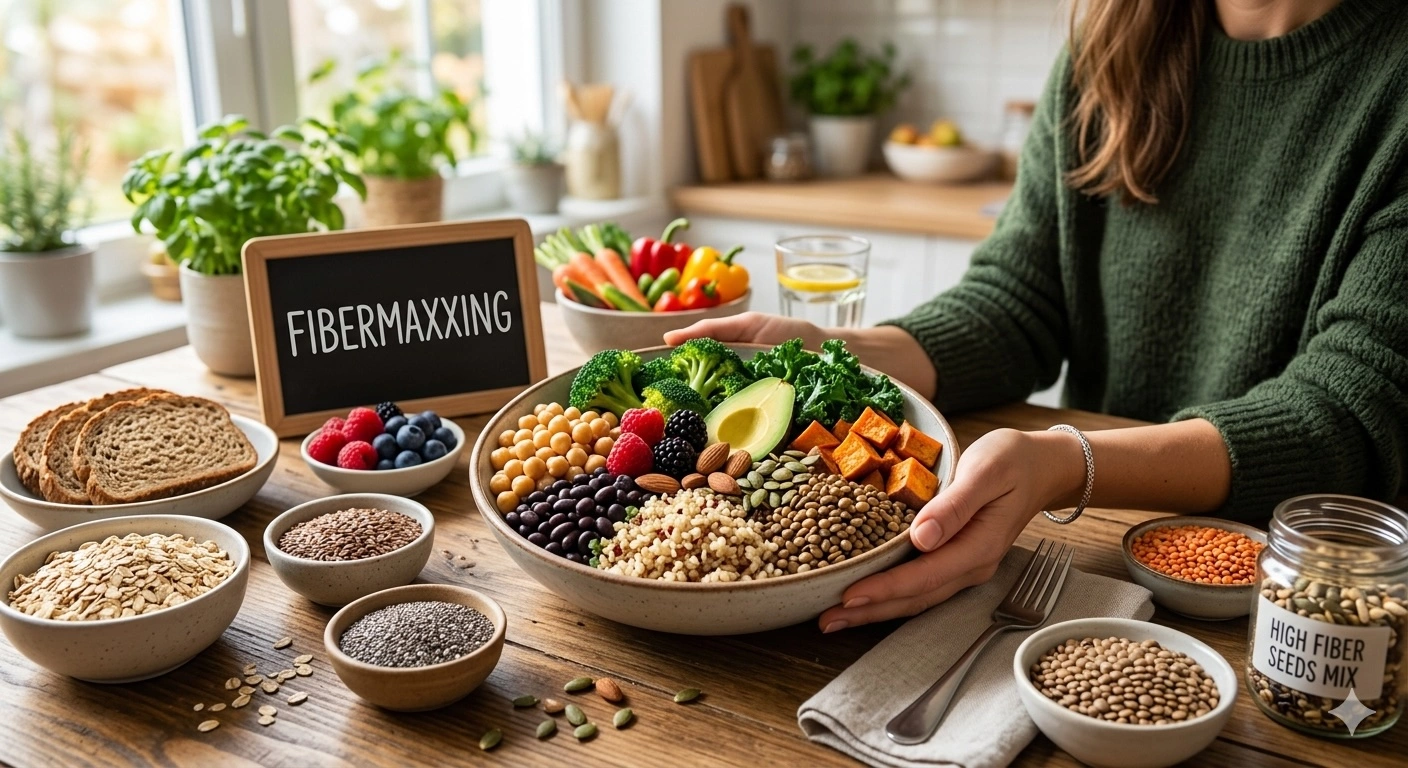
Fibermaxxing is the practice of intentionally maximizing your daily dietary fiber intake — not just hitting the minimum recommended amount, but actively prioritizing high-fiber foods at every meal. Think vegetables, legumes, seeds, whole grains, and fruits woven into breakfast, lunch, dinner, and snacks.
The trend has exploded across TikTok (#fibermaxxing, #guthealth), wellness podcasts, and biohacking communities — and for good reason. Fiber has quietly become “the new protein” of the nutrition world, overtaking macros as the nutrient people are most focused on optimizing.
And the science backs up the hype. A landmark March 2026 study from Tufts University confirmed that eating enough fiber is one of the simplest, most powerful ways to boost long-term health — from supporting digestion and feeding beneficial gut microbes to regulating blood sugar and cholesterol.
Why Most Americans Are Starting From Behind
Here’s a sobering fact: only 7% of American adults currently consume the recommended daily intake of dietary fiber, according to the American Society for Nutrition.
Current guidelines recommend:
- 25 grams per day for adult women
- 38 grams per day for adult men
Most people are getting somewhere between 10–15 grams daily — less than half of what their gut actually needs to thrive.
That gap matters enormously. Research consistently shows that chronically low fiber intake is linked to metabolic dysfunction (read more about why this happens here), cardiovascular problems, poor blood sugar control, increased inflammation, and even a higher risk of certain cancers. Your gut microbiome — the 100 trillion microbes living in your digestive tract — depends on fiber as its primary food source. When you starve your microbiome, you starve your health.
The Science Behind Why Fiber Is So Powerful
To understand why fiber is getting so much attention, it helps to understand what it actually does inside your body.
Fiber Feeds Your Gut Microbiome
Dietary fiber acts as a prebiotic — food for your beneficial gut bacteria. When these bacteria ferment fiber, they produce short-chain fatty acids (SCFAs), particularly butyrate. SCFAs are critical for gut health: they strengthen the intestinal lining, reduce systemic inflammation, support immune function, and even communicate with your brain via the gut-brain axis.
A diverse, well-fed microbiome produces more SCFAs, which means better digestion, better immunity, and better mood regulation.
Fiber Stabilizes Blood Sugar
Soluble fiber slows the absorption of sugar into the bloodstream, preventing glucose spikes and crashes. This is why high-fiber meals leave you feeling more energized and satisfied for longer — and why fiber is increasingly being called a “natural GLP-1 supporter,” mimicking some of the appetite-regulating effects that have made weight-loss medications so popular.
Fiber Supports Long-Term Metabolic Health
Adequate fiber intake is strongly linked to reduced risk of type 2 diabetes, obesity, and cardiovascular disease. One researcher from Tufts University noted that there is a nine-year gap between people who live to old age in good health versus those who don’t — and behavioral and nutritional strategies that support long-term vitality, like adequate fiber intake, are exactly the kind of tools that can help close that gap.
The Shift: From Fiber Quantity to Fiber Diversity
Here’s where fibermaxxing gets more nuanced — and where many people are missing the bigger picture.
Eating more fiber is great. But eating a diverse variety of fiber types is even more important.
Registered dietitians know that fiber is becoming the new protein, but the real focus should be on fiber diversity, not just fiber quantity. This means consuming fiber from a wide array of plant sources — not just loading up on one supplement or one food.
Why does diversity matter so much? Because different gut bacteria feed on different types of fiber. When you eat a wide variety of fiber sources, you cultivate a richer, more resilient microbiome — one with a broader community of beneficial bacteria that can perform different functions for your health.
Eating only psyllium husk every day, for example, feeds a narrow subset of gut bacteria. But eating a mix of vegetables, fruits, legumes, seeds, and whole grains? That’s like hosting a diverse buffet for your microbiome.
The Best High-Fiber Foods to Diversify Your Plate
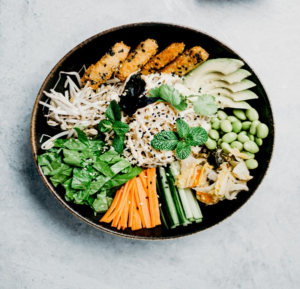
Ready to start “smart fibermaxxing”? Here are the food categories and specific sources to prioritize for both quantity and diversity:
Vegetables
- Broccoli, Brussels sprouts, artichokes, peas, leafy greens, carrots
Legumes
- Lentils, black beans, chickpeas, kidney beans, split peas
Fruits
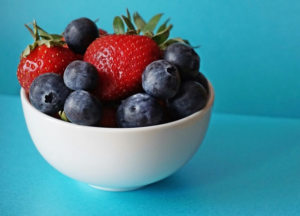
- Raspberries, apples (with skin), pears, avocados, bananas (slightly underripe for resistant starch)
Whole Grains
- Oats, quinoa, barley, brown rice, whole wheat
Seeds
- Chia seeds, flaxseeds, hemp seeds, pumpkin seeds
Prebiotic-Rich Foods
- Garlic, onions, leeks, asparagus, dandelion greens — these are particularly powerful prebiotics that feed beneficial bacteria like Bifidobacterium and Lactobacillus.
The goal isn’t perfection — it’s variety. Read our blog post about the different types of fiber and where to get them here.
A useful benchmark that’s gained traction in gut health circles over the past few years: try to eat 30 different plant-based foods per week. Research suggests this level of diversity is strongly associated with a richer, healthier microbiome.
How to Start Fibermaxxing the Smart Way
If you’re currently eating a typical low-fiber Western diet, the worst thing you can do is dramatically spike your fiber intake overnight. That’s a recipe for bloating, gas, and digestive discomfort — which is why so many people try fibermaxxing and quit within a week.
Here’s how to do it right:
1. Increase gradually. Add 3–5 grams of fiber per week rather than all at once. Give your microbiome time to adapt. Seriously, go slow.
2. Hydrate consistently. Fiber absorbs water, so increasing fiber without increasing fluid intake can lead to constipation rather than relieving it. Aim for at least 8 glasses of water per day. In summer months, bump up the fluid even more.
3. Start with whole foods first. Prioritize fiber from real food before turning to supplements. Whole foods deliver additional nutrients, polyphenols, and phytochemicals that supplements can’t replicate. Check out our polyphenol-rich salad recipe here.
4. Diversify your sources. Each week, try adding one or two new high-fiber foods you don’t typically eat. Rotate your vegetables, experiment with different legumes, and mix up your grains.
5. Consider a quality prebiotic supplement. If you’re struggling to hit your fiber goals through diet alone, a targeted prebiotic fiber supplement — one that includes diverse fiber types like inulin, FOS, pectin, or resistant starch — can help fill the gaps.
The Bottom Line: Fiber Is the Foundation of Gut Health
Fibermaxxing isn’t just another fleeting wellness trend. It’s a return to something fundamental: feeding your body — and your microbiome — what it actually needs to function at its best.
The conversation has evolved well beyond “eat more vegetables.” In 2026, we understand that fiber diversity drives a thriving gut microbiome, which in turn supports everything from your immune system and metabolic health to your energy levels, mood, and long-term disease risk.
Whether you’re just starting your gut health journey or looking to level up your current routine, prioritizing a diverse, fiber-rich diet is one of the highest-return investments you can make in your health.
Your gut — and the 100 trillion microbes calling it home — will thank you.
And, if you’re interested in looking at the bigger picture, I’ve also put together a guide to how to improve gut health.
At EverVital Nutrition, we believe that optimal health starts in the gut. Explore our range of prebiotic fiber supplements and gut health support products designed to complement a diverse, whole-food diet. All this, discounted, at our online dispensary at Fullscript.