

By Donna Monthei, RDN, LD | Originally Published: January 27, 2026 | Medically Reviewed on June 18, 2026
Remember the old Food Guide Pyramid? For decades, we were told to build our health on a base of 60-70% calories from carbohydrates like cereals, white bread, and muffins. That model is officially a thing of the past.
The newly released Dietary Guidelines for Americans 2025-2030 (read them here) represent a massive shift toward “real food” and whole, nutrient-dense eating. Released in January 2026, these updated protein intake guidelines favor an inverted pyramid approach, prioritizing high-quality, nutrient-dense protein foods as part of a healthy dietary pattern.
The most significant change? The new recommendation is 1.2 to 1.6 grams of protein per kilogram of body weight—a dramatic increase from the previous 0.8 g/kg that stood unchanged for over 70 years. If you’re goal is to lose weight, then that recommendation is 1.2 to 1.6 grams of protein per kg of GOAL body weight.
Let’s take a deeper dive into why these new protein intake guidelines 2025 mark such a significant shift, and why protein is the single most important macronutrient for weight loss, muscle maintenance, AND optimal gut health.
Why the 2025 Protein Intake Guidelines Matter More Than Ever
Understanding optimal protein intake isn’t just about building muscle or losing weight—it affects every system in your body, from your immune function to your digestive health. Yet for over 70 years, the protein recommendations remained stagnant at 0.8 g/kg body weight.
Here’s the critical problem with the old RDA: The previous recommended dietary allowance called for 0.8 grams of protein per kilogram of body weight—about 54 grams daily for a 150-pound person. But this recommendation represented the minimum amount needed to avoid nitrogen loss and prevent deficiency—not the optimal amount for thriving health, muscle maintenance, or metabolic function.
The 2025 Game-Changing Update
The new protein intake guidelines 2025 finally acknowledge what nutrition scientists have known for years: we need significantly more protein than previously recommended.
Protein serving goals: 1.2–1.6 grams of protein per kilogram of body weight per day, adjusting as needed based on your individual caloric requirements.
For that same 150-pound (68 kg) person:
- Old RDA: 54g daily (minimum to prevent deficiency)
- New 2025 Guidelines: 82-109g daily (optimal for health)
That’s a 50-100% increase in recommended protein intake—reflecting decades of research showing that higher protein intake supports muscle maintenance, metabolic health, satiety, and overall wellness.
The Science Behind Higher Protein Recommendations
Why did the 2025 Dietary Guidelines dramatically increase protein recommendations? The science is clear and compelling.
Protein Burns More Calories: The Thermic Effect Advantage
Your body burns calories to digest, absorb, and metabolize food, regardless of what you eat. This is called the Thermic Effect of Food, or TEF. This calorie burn is independent of what you burn when you’re active or that which your body burns just to breathe and keep that heart beating.
Here’s why protein is the metabolism superstar: protein has a much higher thermic effect (20-30%) compared to carbs (5-10%) and fat (0-3%).
Since protein has the highest thermic effect, that means it requires MORE energy for your body to digest, absorb, and metabolize protein versus carbs or fat. In other words, you’re burning more calories just by choosing protein-rich foods—without any extra exercise.
According to Peter Attia, M.D. and Don Layman, PhD., protein is the “super macro.” You can listen to them discuss protein on Peter Attia’s podcast, The Drive, right here. Dr. Layman is Professor Emeritus in the Department of Food Science and Human Nutrition at the University of Illinois at Urbana-Champaign and has been a leader in research on protein, nutrition for athletic performance, obesity, diabetes, and cardiovascular health. He’s THE protein authority.
Protein Keeps You Fuller Longer
Beyond the metabolic boost, protein is the most satiating macronutrient. Higher protein intake means you feel fuller for longer periods, naturally reducing overall calorie consumption without the white-knuckle willpower required by restrictive diets.
This is why the new Guidelines move in the right direction by reinforcing the importance of reducing added sugars and cutting back on refined grains and other highly processed foods while simultaneously increasing protein recommendations.
What the 2025 Dietary Guidelines Say About Protein Sources
The new protein intake guidelines 2025 emphasize variety and quality, not just quantity.
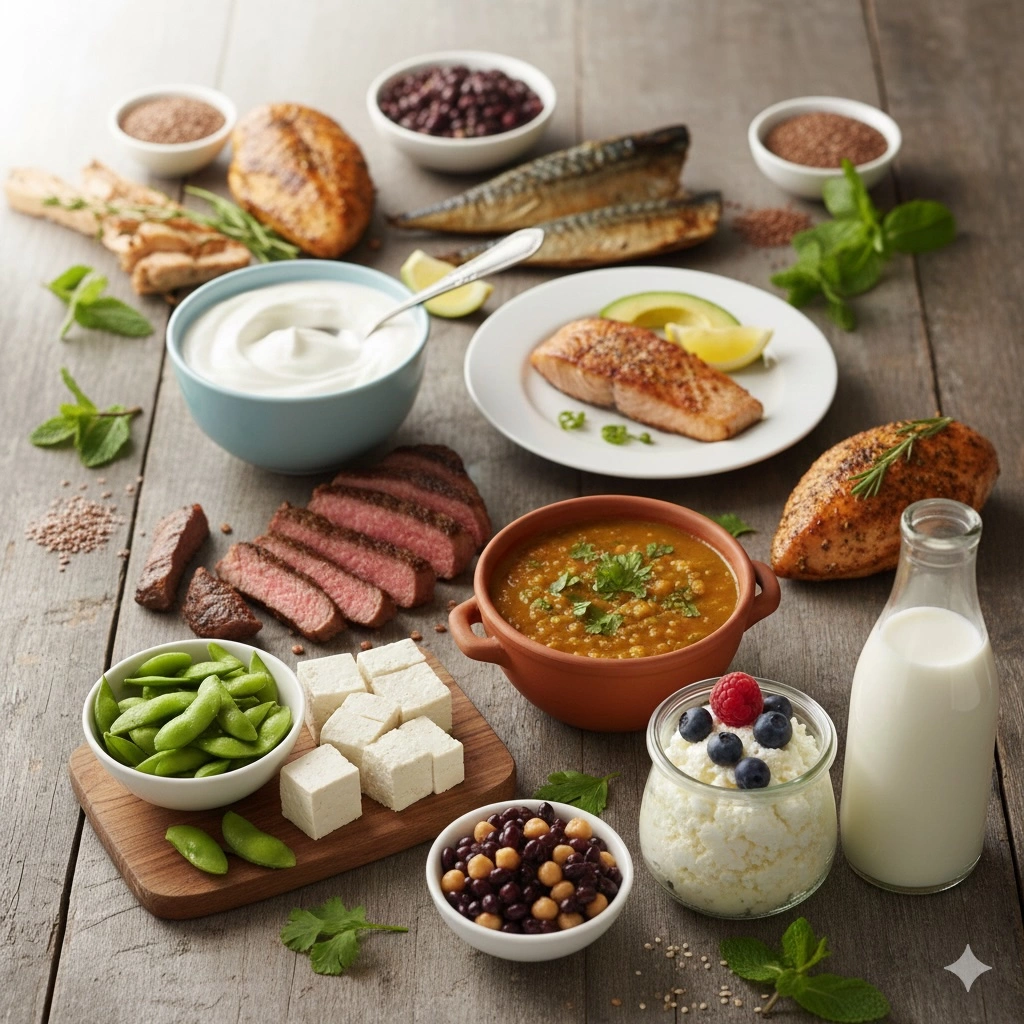
Consume a variety of protein foods from animal sources, including eggs, poultry, seafood, and red meat, as well as a variety of plant-sourced protein foods, including beans, peas, lentils, legumes, nuts, seeds, and soy.
And there’s an ongoing debate about whether you can meet your needs without animal sources. Here’s what Dr. Don Layman has to say about plant sources of protein:
“They all have essential amino acids in them, but typically if you’re comparing an animal on a plant protein, you need 50 to 100% more of the plant protein to be equal. So, if you decide that you’re going to eat 120 grams of protein per day, you can do pretty well with plant proteins. But if you decide you’re only going to eat 60 grams per day, you’re probably going to be deficient in one or more essential amino acids with plant proteins.”
Essentially, if your sources of protein are strictly plant-based, you’ll need to eat about 50% more protein to get sufficient amounts of certain amino acids, even if you eat a variety of plant-based sources of protein.
Key Recommendations for Protein Quality
Choose High-Quality Sources: Prioritize high-quality, nutrient-dense protein foods as part of a healthy dietary pattern
Preparation Matters: Swap deep-fried cooking methods with baked, broiled, roasted, stir-fried, or grilled cooking methods
Avoid Processed Proteins: Consume meat with no or limited added sugars, refined carbohydrates or starches, or chemical additives. If preferred, flavor with salt, spices, and herbs
This focus on whole, minimally processed protein sources aligns perfectly with the overarching message of the 2025 guidelines: eat real food.
Essential Amino Acids: The Building Blocks You Can’t Make
While the new protein intake guidelines 2025 provide clear targets for total protein, it’s crucial to understand that protein quality matters just as much as quantity.
Amino acids are the building blocks that make up protein—there are 20 amino acids in total. Only nine of them are essential, meaning your body cannot make them, and so they must come from food.
Each of these essential amino acids has a specific role, all essential to your body’s optimal function:
- Phenylalanine — used in the synthesis of neurotransmitters tyrosine, dopamine, epinephrine, and norepinephrine
- Valine — one of the branched-chain amino acids (BCAAs) that helps stimulate muscle growth and regeneration as well as energy production
- Threonine — the main part of collagen and elastin, so it’s important in skin and connective tissue health
- Tryptophan — a precursor to serotonin, a neurotransmitter that regulates your sleep, mood, and appetite
- Methionine — plays a role in metabolism and detox. Also required for the absorption of zinc and selenium (especially important for hypothyroid people!)
- Leucine — another BCAA that is critical for protein synthesis and muscle repair. Also helpful in the regulation of blood glucose, wound healing, and the production of growth hormones
- Isoleucine — the third BCAA, involved in muscle metabolism, immune function, and energy regulation
- Lysine — has a role in protein synthesis, calcium absorption, and the production of hormones and enzymes. It’s especially important in the production of collagen and elastin
- Histidine — used to produce histamine, a neurotransmitter that is important in immune response, digestion, sexual function, and sleep/wake cycles
You can see that lack of your essential amino acids can negatively affect your entire body—nervous, reproductive, immune, and digestive systems.
How to Meet the New 2025 Protein Intake Guidelines
To ensure adequate intake of all nine essential amino acids while meeting the new protein recommendations, focus on complete protein sources that contain all essential amino acids:
Essential Amino Acids Protein Sources (contain all 9 essential amino acids):
- Animal Sources:
- Beef, bison, lamb, elk
- Poultry (chicken, turkey)
- Fish and seafood
- Eggs
- Dairy products
- Plant Sources:
- Quinoa
- Soy products
Nearly Complete Protein Sources:
- Certain seeds like chia and hemp
- Soy products (missing one essential amino acid in optimal ratios)
For plant-based eaters: You can combine incomplete proteins (like rice and beans, or hummus and whole grain pita) to get all essential amino acids, though this requires more planning and typically larger portions to meet the higher 2025 protein requirements.
Protein Intake Guidelines 2025 by Age and Activity Level
The beauty of the new protein intake guidelines 2025 is that they acknowledge individual variation. Your optimal protein intake depends on several factors:
General Protein Intake Guidelines Based on 2025 Recommendations:
- Sedentary adults: 1.0-1.2 g/kg body weight
- Active adults: 1.2-1.6 g/kg body weight (the new standard recommendation)
- Athletes/highly active: 1.6-2.2 g/kg body weight
- Older adults (65+): 1.0-1.5 g/kg body weight (to prevent muscle loss)
- Pregnancy/lactation: 1.1-1.3 g/kg body weight (or minimum 71g daily)
Why Age Matters
Like just about everything, your protein digestion and absorption efficiency decrease with age. This means that as you get older, the amount of protein you need to maintain muscle mass and stay strong increases.
It has been estimated that 0.5-1% of muscle mass is lost annually from the age of 50, which means increased dietary protein may be required earlier in life to mitigate the muscle aging process. The 2025 guidelines specifically address this by recommending 1.0-1.5 g protein/kg for healthy older adults (>65 years) to optimize physical function and maintain health.
Real-World Examples
For a 150-pound (68 kg) active adult following the new 2025 guidelines:
- Minimum: 82g daily (1.2 g/kg)
- Optimal: 82-109g daily (1.2-1.6 g/kg)
- Athletic: 109-150g daily (1.6-2.2 g/kg)
For a 200-pound (91 kg) active adult:
- Minimum: 109g daily
- Optimal: 109-145g daily
- Athletic: 145-200g daily
Protein Quality Matters: Not All Proteins Are Equal
When we talk about the new protein intake guidelines 2025, we can’t ignore protein quality. The guidelines emphasize high-quality, nutrient-dense proteins for good reason.
What Makes a High-Quality Protein?
High-quality proteins are determined by:
- Amino acid profile — Does it contain all nine essential amino acids in adequate amounts?
- Digestibility — How well can your body break it down and absorb it?
- Bioavailability — How much of the protein can your body actually use?
Animal proteins generally rank highest in quality because they’re complete proteins with high digestibility. The digestible indispensable amino acid score (DIAAS) ranks proteins, with scores over 100 considered excellent:
- Whey protein: ~110-150
- Eggs: ~113-119
- Milk: ~114-122
- Beef: ~111-112
- Chicken: ~108-110
- Fish: ~104-109
Plant proteins typically have lower DIAAS scores due to lower digestibility and incomplete amino acid profiles:
- Soy protein: ~84-91
- Pea protein: ~64-73
- Rice protein: ~42-59
- Wheat protein: ~40-45
This doesn’t mean plant proteins are “bad”—it just means you may need to consume more of them to meet the higher protein requirements in the 2025 guidelines, and combining different plant proteins can improve their overall quality.
Protein Timing and Distribution: When You Eat Matters
Meeting the new protein intake guidelines 2025 isn’t just about hitting your daily total—it’s also about when and how you distribute protein throughout the day.
The commonly observed uneven pattern of protein ingestion suggests a potential risk of insufficient stimulation of muscle protein synthesis, even when daily protein goals are being met. In other words, eating 10 grams at breakfast, 15 grams at lunch, and 100 grams at dinner isn’t as effective as spreading protein more evenly.
Optimal Protein Distribution for the 2025 Guidelines
Research suggests:
- Aim for a minimum of 25-30 grams of protein per meal to maximize muscle protein synthesis
- Space protein intake throughout the day rather than loading up at one meal
- Include protein at breakfast to jumpstart metabolism and reduce hunger
- Ingestion of a high-protein meal before sleep has been shown to increase overnight muscle protein synthesis
This even distribution ensures your body has a steady supply of amino acids for repair, recovery, and metabolic functions throughout the day—perfectly aligned with the 2025 emphasis on optimal protein utilization.
Protein and Gut Health: The Critical Connection
And let’s not forget gut health… we always have a gut-first approach over here at EverVital Nutrition.
The relationship between protein intake and gut health is more complex than you might think. While the new 2025 protein intake guidelines emphasize adequate protein for overall health, the type, amount, and source of protein all profoundly impact your microbiome and digestive wellness.
How Protein Supports Gut Health
1. Gut Lining Repair and Maintenance
Eggs are rich in glutamine, which plays a key role in maintaining and repairing the intestinal lining and can help prevent “leaky gut,” or increased intestinal permeability. Specific amino acids like glutamine, threonine, and glycine are critical building blocks for the cells that line your digestive tract.
Without adequate protein—especially now that we know the old 0.8 g/kg recommendation was insufficient—your gut lining cannot repair itself properly, leading to:
- Increased intestinal permeability (leaky gut)
- Poor nutrient absorption
- Heightened food sensitivities
- Chronic inflammation
2. Digestive Enzyme Production
All digestive enzymes are proteins. Without adequate protein intake meeting the new 2025 guidelines, your body cannot produce sufficient:
- Proteases (to break down proteins)
- Lipases (to break down fats)
- Amylases (to break down carbohydrates)
This creates a vicious cycle where inadequate protein leads to poor protein digestion, which leads to even worse protein absorption—exactly what the updated guidelines aim to prevent.
3. Immune Function in Your Gut
Approximately 70-80% of your immune system resides in your gut. Amino acids can be metabolized into numerous microbial metabolites, and these metabolites participate in various physiological functions related to host health and diseases. Adequate protein—at the levels recommended in the 2025 guidelines—supports the production of antibodies and immune cells that protect your gut from pathogens.
The Protein-Microbiome Connection: Why Source Matters
Here’s where things get really interesting, and where the 2025 guidelines’ emphasis on “high-quality, nutrient-dense” proteins becomes crucial.
Emerging evidence suggests that dietary protein strongly impacts intestinal microbiota composition and function and that protein-microbiota interactions can have critical impacts on host health.
Protein Source Dramatically Affects Your Gut Bacteria
Recent groundbreaking research revealed that protein sources appear to have major effects on both the population and function of the gut microbiome. Different protein sources—whether from eggs, dairy, meat, soy, legumes, or rice—can dramatically change which bacteria thrive in your gut.
An increase in short-chain fatty acid (SCFA)-producing bacteria (Bifidobacterium, Lactobacillus, Bacteroides, Roseburia, Coprococcus, and Ruminococcus) and inflammation-inhibiting bacteria, as well as a decrease of inflammation-causing bacteria, were observed with specific protein intake patterns, which can collectively improve gut health.
The Quality and Quantity Balance
There is growing recognition that composition and metabolic activity of the gut microbiota can be modulated by the dietary proteins which in turn impact health. The amino acid composition and digestibility of proteins, which are influenced by its source and amount of intake, play a pivotal role in determining the microbiota.
Here’s what this means practically for meeting the 2025 protein intake guidelines:
✓ High-quality, easily digestible proteins (like eggs, fish, poultry, and Greek yogurt emphasized in the 2025 guidelines) are broken down and absorbed in the small intestine, providing your body with amino acids while minimizing undigested protein reaching the colon.
✓ Excessive protein or poorly digestible proteins can lead to increased protein fermentation in the colon, producing potentially harmful metabolites and gas. Alterations in dietary protein components lead to significant changes in microbial metabolites including short chain fatty acids, ammonia, amines, and gases such as hydrogen, sulfide and methane which are cytotoxins, genotoxins and carcinogens associated with development of colon cancer and inflammatory bowel diseases.
✓ Protein variety matters: Not only protein quantity has strong effects on microbiota composition and function but also protein source has similar or even stronger effects. The 2025 guidelines’ recommendation to consume a variety of protein sources (eggs, poultry, seafood, red meat, plus plant proteins) supports optimal microbiome diversity.
Optimal Protein Strategy for Gut Health Under 2025 Guidelines
Based on the new protein intake guidelines 2025 and current gut health research, here’s how to optimize your protein intake:
- Meet the new protein targets (1.2-1.6 g/kg for most active adults)
- Choose high-quality, easily digestible proteins as your primary sources
- Distribute protein evenly throughout the day (25-30g per meal)
- Vary your protein sources to support microbiome diversity
- Pair protein with prebiotic fiber from vegetables to feed beneficial bacteria
- Include fermented foods like Greek yogurt or sauerkraut for probiotics alongside protein
- Follow the 2025 guideline to avoid heavily processed meats and proteins with added sugars or chemical additives
Best Protein Sources for Gut Health (2025 Guidelines-Approved)
The 2025 Dietary Guidelines emphasize variety and quality. Here are the top protein sources that meet the new recommendations while supporting gut health:
Gut-Friendly Animal Proteins:
Eggs — One large egg delivers about six grams of highly digestible protein and is rich in choline and glutamine, which plays a key role in maintaining and repairing the intestinal lining. The 2025 guidelines specifically highlight eggs as a key protein source.
Greek Yogurt — Thanks to its blend of probiotics, calcium and protein, Greek yogurt earns a top spot on gut-friendly protein picks. Choose varieties with “live and active cultures” and follow the 2025 recommendation for full-fat dairy with no added sugars.
Wild-Caught Fish — Rich in omega-3 fatty acids that reduce gut inflammation, plus highly digestible protein. Seafood is prominently featured in the 2025 protein recommendations.
Pasture-Raised Poultry — Lean, easily digestible protein without the inflammatory compounds found in processed meats. The 2025 guidelines emphasize poultry as a core protein source.
Grass-Fed Beef — Higher in omega-3s and conjugated linoleic acid (CLA) than conventional beef, supporting reduced inflammation. Red meat is included in the 2025 variety recommendations when consumed with no added sugars or chemical additives.
Bone Broth — Contains collagen and gelatin that directly support gut lining repair
Gut-Friendly Plant Proteins:
Lentils and Beans — Rich in plant-based protein and prebiotic fiber, lentils help nourish the good bacteria in your gut, with half a cup of cooked lentils packing around 9 grams of protein and 8 grams of fiber. The 2025 guidelines specifically mention beans, peas, lentils, and legumes.
Nuts and Seeds — Provide protein, healthy fats, and fiber. The 2025 guidelines include these as important plant-based protein sources.
Soy Products — Tofu, tempeh, and edamame provide complete plant proteins and are specifically mentioned in the 2025 recommendations.
Protein Intake Mistakes That Hurt Your Gut
Just as important as meeting the new 2025 protein intake guidelines is avoiding common mistakes that can compromise your gut health:
Mistake #1: Ignoring Protein Distribution
Eating 100+ grams at dinner to “hit your target” doesn’t work as well as spreading 25-30g across meals. Your body can only utilize so much protein at once.
Mistake #2: Relying on Heavily Processed Protein Sources
The 2025 guidelines are clear: Consume meat with no or limited added sugars, refined carbohydrates or starches, or chemical additives. Processed meats, protein bars loaded with additives, and heavily processed protein powders contradict the “eat real food” message.
Mistake #3: Not Varying Protein Sources
The 2025 guidelines emphasize variety for good reason. Eating only chicken breast daily limits amino acid diversity and may contribute to microbiome imbalances.
Mistake #4: Not Pairing Protein with Vegetables
The 2025 guidelines place vegetables and fruits alongside protein at the top of the inverted pyramid. High-protein meals need adequate fiber from vegetables to prevent constipation and support a balanced microbiome.
Your Gut Health Determines How Well You Use Protein
Reading about the new 2025 protein intake guidelines is valuable, but here’s the truth: your individual ability to digest, absorb, and utilize protein depends entirely on YOUR gut health.
Meeting the new 1.2-1.6 g/kg protein recommendation means nothing if your gut can’t process it effectively.
Are you experiencing:
- Constant bloating after protein-rich meals?
- Difficulty gaining or maintaining muscle despite eating “enough” protein?
- Persistent fatigue even after increasing protein intake?
- Food sensitivities that limit your protein choices?
- Digestive issues that worsen with certain proteins?
These could be signs that your gut can’t properly digest and absorb the protein you’re eating—even if you’re meeting the new 2025 guidelines.
Here’s where many people get stuck: They increase their protein intake to meet the new recommendations without understanding whether their gut can actually handle it. If you have gut dysbiosis, low digestive enzyme production, intestinal permeability, or bacterial imbalances, even “adequate” protein intake won’t translate to adequate protein utilization.
Stop Guessing. Start Healing.
You’ve learned about the new 2025 protein intake guidelines and why protein matters for gut health. But here’s what you really need to know: without understanding what’s happening in YOUR gut, you’re just guessing at the right approach.
How much longer are you willing to:
- Increase your protein without knowing if your gut can digest it?
- Wonder if your digestive issues stem from the type or amount of protein you’re eating?
- Miss out on the muscle, energy, and metabolic benefits of optimal protein because your gut isn’t functioning properly?
- Spend money on expensive protein supplements that might not even be absorbed?
Schedule a free gut health assessment with EverVital Nutrition and let’s uncover what’s really going on. During this complimentary call, we’ll:
✓ Review your current protein intake and how your body responds to it
✓ Discuss your digestive symptoms and identify potential absorption issues
✓ Determine if comprehensive stool testing would reveal barriers to protein utilization
✓ Identify potential enzyme deficiencies, bacterial imbalances, or gut lining damage
✓ Create a personalized roadmap to optimize both your protein intake AND your gut’s ability to use it
No more one-size-fits-all recommendations. No more wondering if you’re following the 2025 guidelines correctly for YOUR body. Just clear answers based on YOUR gut’s unique needs.
The 2025 Dietary Guidelines increased protein recommendations for good reason. Let’s make sure your gut can actually utilize it.