


Medically reviewed by Donna Monthei, RDN, LD | Published September 8, 2026
If you’ve turned on the news or scrolled through social media over the last couple of years, you’ve heard the term GLP-1. Injections mimicking this appetite-suppressing hormone have completely reshaped how we talk about weight loss, satiety, and metabolic health.
But here is the million-dollar question almost nobody is asking: Why are our bodies making less of this crucial hormone naturally?
Before Ozempic…
Before GLP-1 became the buzzword of the decade, your digestive tract was already hard at work functioning as a natural GLP-1 factory.
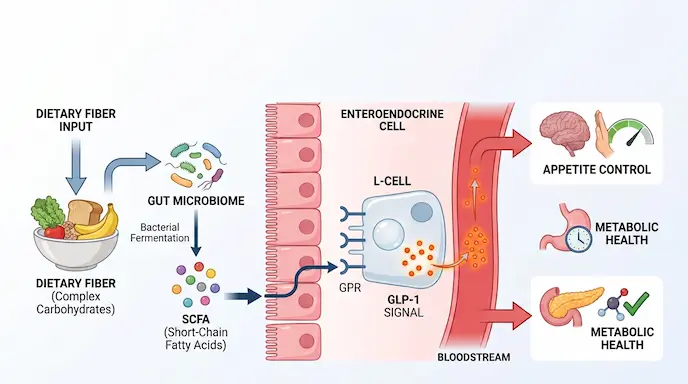
Nestled directly inside your gut lining are specialized cells (called L-cells) that are hardwired to release GLP-1 whenever you digest nutrient-dense foods.
When your L-cells work correctly, GLP-1 slows down stomach emptying, signals your brain that you are full, and maintains healthy blood sugar balance.
The catch? Your L-cells don’t operate in a vacuum. They rely on direct chemical signals sent straight from your gut microbiome. If your gut microbiome is out of balance, your natural GLP-1 production drops to nothing—leaving you dealing with constant cravings, midday energy slumps, and weight gain.
Let’s pull back the curtain on how gut bacteria control appetite, and how you can fuel your microbiome to boost GLP-1 naturally.
The Secret Switch: How Gut Bacteria Trigger Natural GLP-1
Your gut bugs are active chemical factories. When you feed your beneficial gut bacteria prebiotic fibers, they break them down through fermentation to produce powerful metabolic compounds called Short-Chain Fatty Acids (SCFAs)—specifically acetate, propionate, and butyrate. (Read more about the superpowers of butyrate here.)
These SCFAs act like key cards. They bind to specific receptors (known as free fatty acid receptors) located directly on the surface of your intestinal L-cells.
When an SCFA unlocks that receptor, it flips the switch, instructing your L-cells to flood your system with natural GLP-1.
A landmark study published in Nature demonstrated that short-chain fatty acids directly stimulate GLP-1 secretion in the colon, proving that your diet dictates your appetite-regulating hormone signaling. If you feed your beneficial gut bugs, they repay you by turning on your body’s built-in satiety system.
3 Reasons Your Natural GLP-1 Production Shuts Down
If our bodies are naturally equipped to produce GLP-1, why are so many people struggling with runaway hunger and metabolic resistance?
It usually boils down to three major gut disruptions:
1. Starving Your SCFA-Producing Bacteria
The modern Western diet—heavy in refined sugars and ultra-processed foods—leaves very little fiber for your beneficial microbes to eat. When SCFA-producing species (like Akkermansia muciniphila and Faecalibacterium prausnitzii) starve, your SCFA levels plummet, leaving your L-cells without the chemical signals needed for gut bacteria GLP-1 release.
2. Chronic Intestinal Permeability (“Leaky Gut”)
When your intestinal lining gets inflamed or damaged, toxic bacterial fragments (like lipopolysaccharides, or LPS) slip into your bloodstream. This triggers systemic, low-grade inflammation that impairs insulin sensitivity and interferes with normal gut-brain hormone signaling. As we discussed in our blog post on Leaky Gut and Belly Fat, silent barrier damage often locks up your body’s metabolic flexibility.
3. Gut Dysbiosis & Overgrowth
Conditions like SIBO (Small Intestinal Bacterial Overgrowth) or a general microbial imbalance create a hostile environment in the colon. Pathogenic bacteria outcompete your beneficial bugs, shutting down the exact metabolic pathways responsible for keeping your appetite and blood sugar in balance.
You don’t need a magic trick to support your body’s hormonal output; you just need to feed the specific microbial strains responsible for pressing the GLP-1 button.
Natural GLP-1 foods to reboot your internal GLP-1 factory
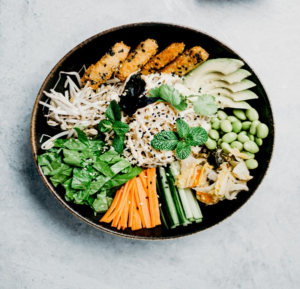
- Resistant Starches: Cooled and cooked potatoes, rice, and oats, green bananas, and legumes bypass your small intestine intact and land in your colon, where they serve as a favorite feast for SCFA-producing bugs.
- Polyphenol-Rich Foods: Dark berries, green tea, dark chocolate, and extra virgin olive oil feed Akkermansia muciniphila, a cornerstone bacterial strain directly linked to improved gut barrier health and enhanced metabolic signaling.
- Beta-Glucans: Found in abundance in oats, barley, and medicinal mushrooms, these soluble fibers form a viscous gel in the digestive tract that slows glucose absorption and triggers sustained GLP-1 release.
Stop Guessing—Start Testing Your Gut Ecosystem
If you’ve increased your fiber intake but still feel chronically bloated, sluggish, or constantly hungry, adding more raw veggies might actually backfire. Literally. If underlying bacterial overgrowths or low digestive enzymes are present, high-fiber foods can ferment too quickly in the wrong places, leading to severe gas and distension.
That’s why guessing with generic diets rarely yields long-term results.
In our practice, we use comprehensive functional gut testing—like the GI-MAP Stool Test—to look under the hood. By evaluating your exact levels of SCFA-producing bacteria, opportunistic pathogens, and inflammatory markers, we can map out a targeted protocol to restore your gut wall, rebalance your microbiome, and get your natural metabolic engine firing on all cylinders.
The Bottom Line on Gut Health and GLP-1
Your body isn’t broken, and your appetite isn’t out of control because you lack willpower. Often, your gut’s natural hormone signaling system simply lacks the microbial fuel and healthy intestinal environment it needs to function properly.
Ready to stop playing guessing games with your digestion and metabolic health?
Take our 2-Minute Gut Health Quiz today to identify your unique symptom profile and discover next steps to restore your gut ecosystem!
Donna Monthei is a Registered Dietitian and the founder of EverVital Nutrition, specializing in root-cause gut health testing and microbiome restoration for patients with IBS, SIBO, bloating, food intolerances, and chronic digestive symptoms. She uses the GI-MAP as the cornerstone of her diagnostic approach and sees patients nationwide via telehealth. Learn more at evervitalnutrition.com.