




By Donna Monthei, RDN, LD | EverVital Nutrition
One of the questions I get more than almost any other from patients who have been struggling with chronic gut symptoms is some version of this: “I’ve seen so many gut health tests online — which one actually works?”
It’s a fair question. The gut health testing market has exploded in recent years, and if you’ve spent any time researching options, you’ve probably encountered everything from AI-powered microbiome sequencing kits to consumer wellness tests promising to decode your digestive destiny. It can feel overwhelming — especially when you’re already exhausted from years of symptoms, inconclusive test results, and treatments that never quite get to the bottom of things.
So let me answer that question directly, from the perspective of a Registered Dietitian who has worked with hundreds of patients dealing with IBS, SIBO, chronic bloating, unexplained fatigue, food intolerances, and reflux — and who recently did an exhaustive review of the gut health testing landscape to make sure I’m still using the right tool.
The short answer: after evaluating every major player in the space, including the newest AI-powered tests, I confirmed what years of clinical practice had already shown me. The GI-MAP from Diagnostic Solutions Laboratory remains the gold standard for patients with chronic, symptomatic gut disease. Here’s exactly why — and what I found when I looked at the alternatives.
Why “Standard” Testing Keeps Failing Gut Patients
If you’ve been dealing with IBS, SIBO, chronic bloating, or unrelenting digestive symptoms, you’ve probably already been through the conventional testing circuit. Basic bloodwork. Maybe a colonoscopy or endoscopy. Perhaps a breath test for SIBO. And if you’re like most of my patients, you’ve been told everything “looks normal” — or handed a diagnosis with very little explanation of what’s actually causing it.
This isn’t your doctor’s fault. Conventional gastroenterology testing is designed to rule out structural disease and acute infection. It’s excellent at what it does. What it was never designed to do is give you a comprehensive picture of the microbial ecosystem living in your gut — the trillions of bacteria, fungi, parasites, and viruses that profoundly influence how your digestive system functions every single day.
Standard stool cultures can only detect organisms that successfully grow in a lab setting — which misses a significant portion of what’s actually there. Standard bloodwork doesn’t look at the gut at all. And a colonoscopy, while important for ruling out serious structural disease, tells us nothing about the microbial environment that may be driving your symptoms.
This is the gap that comprehensive functional gut testing fills. And it’s why, for patients who have been suffering for months or years without answers, the right gut health test can be genuinely life-changing.
What the GI-MAP Measures — And Why Each Piece Matters for IBS and SIBO Patients
The GI-MAP (Gastrointestinal Microbial Assay Plus) uses quantitative PCR (qPCR) technology — a DNA-based testing method that doesn’t just detect what’s present in your gut, but quantifies it. That means we get actual numbers, not just yes or no answers. And in clinical practice, that distinction changes everything about how we design a treatment protocol.
Here’s a breakdown of what the GI-MAP looks at and why it matters specifically for patients with IBS, SIBO, and chronic gut symptoms:
Bacterial, Viral, and Parasitic Pathogens The first section of the report screens for organisms that have no business being in your gut at significant levels — including Salmonella, C. difficile, Giardia, Campylobacter, and more. Many of my patients are surprised to find active or residual infections here that have never previously been identified, often because standard testing simply wasn’t sensitive enough to catch them.
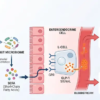
H. pylori — The Sneaky Stomach Bacterium Linked to Bloating, Reflux, and SIBO Helicobacter pylori is one of the most clinically significant findings on a GI-MAP, and one of the most commonly missed on standard testing. H. pyloricolonizes the stomach lining by literally screwing itself into the cells — making it invisible to many conventional tests, including biopsies taken during colonoscopy. I regularly see patients who tested negative for H. pylori with their gastroenterologist but whose GI-MAP comes back clearly positive.
Why does this matter for IBS and SIBO patients specifically? Because H. pylori survives by neutralizing stomach acid. Low stomach acid doesn’t just cause reflux — it disrupts the entire digestive cascade, impairs protein breakdown, allows bacterial overgrowth further down the tract, and creates the exact conditions in which SIBO thrives. Treating SIBO without addressing an underlying H. pylori infection is like bailing out a boat without plugging the hole.
The GI-MAP also reports H. pylori virulence factors — markers that tell us not just whether the bacteria is present, but how aggressive it’s likely to be. This level of nuance is simply not available on most other gut tests.
Commensal and Keystone Bacteria These are your beneficial gut bacteria — the organisms that produce short-chain fatty acids like butyrate, support your gut lining, regulate your immune system, and even influence your mood through the gut-brain axis. When these are depleted (from antibiotic use, stress, poor diet, or infection), the entire microbiome becomes destabilized and symptoms worsen. The GI-MAP shows us exactly which beneficial species are low and which may be overgrown — so we can target restoration precisely.
Opportunistic Bacteria and Overgrowths These are organisms that live harmlessly at normal levels but become problematic when they overgrow. For IBS and SIBO patients, this section is particularly important because certain opportunistic bacteria produce histamine — which can trigger or significantly worsen bloating, food intolerances, and gut inflammation. Identifying and addressing these specific overgrowths is something that no elimination diet, probiotic, or generic gut supplement can do without knowing they’re there.
Fungi and Yeast Candida and other fungal overgrowths are a commonly overlooked driver of IBS-like symptoms — particularly in patients with a history of antibiotic use, high sugar intake, or compromised immune function. These organisms don’t show up on standard testing, but they’re clearly visible on a GI-MAP — and they respond to targeted treatment once identified.
Parasites More common than most people expect, and a significant driver of symptoms when present. Parasitic infections can cause diarrhea, urgency, cramping, fatigue, and nutrient malabsorption — all of which overlap with IBS symptoms and are frequently misattributed to IBS when the underlying cause is never tested for.
Intestinal Health Markers — The Most Clinically Informative Panel This is arguably the section of the GI-MAP that sets it most apart from any other gut test on the market. It includes:
- Elastase — pancreatic enzyme output; tells us whether food is actually being broken down properly
- Steatocrit — fat malabsorption marker
- Calprotectin — gut inflammation marker; elevated levels indicate active inflammation in the intestinal lining
- Secretory IgA — the gut’s frontline immune defense; chronically low sIgA suggests the immune system is under sustained stress and the gut is more vulnerable to infection and reactivity
- Zonulin — a marker of intestinal permeability, or what’s commonly called “leaky gut”; elevated levels indicate the gut lining has become compromised, allowing particles to pass into the bloodstream and triggering systemic inflammation and food sensitivities
For IBS and SIBO patients, these markers often explain things that no other test has been able to. I’ve worked with patients whose symptoms were directly driven by severely low digestive enzyme output — food literally sitting and fermenting rather than being digested — or by chronically elevated inflammation markers that had been invisible on every other test they’d ever run.
I Went Searching for Something Better — Here’s the Honest Truth
I’ll be transparent about something: I don’t use the GI-MAP simply out of habit or because it’s what I’ve always done. I take my responsibility to my patients seriously enough to regularly re-evaluate the tools I use. So, when the newer generation of gut health tests started generating significant buzz — with claims of AI-powered analysis, next-generation sequencing technology, and more comprehensive microbiome profiling — I did an exhaustive review.
I looked carefully at Jona, Tiny Health, Viome, Gut Zoomer, Genova GI Effects, and several others. I evaluated each one through the same clinical lens: Can this test give me the specific, quantified, actionable data I need to build a targeted treatment protocol for a patient who has been suffering with chronic IBS or SIBO for years?
Here is what I found:
Jona is the most technologically impressive of the newer consumer-facing tests. It uses shotgun metagenomic sequencing and applies sophisticated AI to cross-reference results against hundreds of thousands of peer-reviewed studies, producing a personalized “digital twin” of the microbiome. I genuinely respect the innovation here. But when I evaluated the clinical output against what my patients need — specific pathogen quantification, H. pylori virulence factor data, digestive enzyme markers, gut immune function — Jona falls short. It’s built for health optimization in generally well individuals curious about their microbiome. The AI-generated associations and lifestyle recommendations, while interesting, are not a substitute for the quantified clinical data that drives real treatment decisions in symptomatic patients.
Tiny Health uses shotgun metagenomic sequencing and produces thorough, well-organized reports. Its genuine clinical strength is in pediatric and early-life microbiome testing — the first 1,000 days of life — where the company has published legitimate research and built real credibility. For adults with chronic IBS, SIBO, or gut dysbiosis, however, the platform is not designed for the kind of targeted pathogen identification and digestive function analysis that guides meaningful treatment. It also lacks the specific H. pylori virulence reporting and comprehensive intestinal health marker panel that are, for my patient population, non-negotiable.
Viome is the most widely marketed consumer option and the one I’m asked about most frequently. Viome measures RNA rather than DNA, which in theory captures which organisms are metabolically active rather than just present. In practice, however, the reports generate broad recommendations that are heavily tied to Viome’s own supplement line — raising obvious concerns about objectivity. For patients with chronic gut symptoms looking for actionable clinical answers, Viome consistently underdelivers.
Genova GI Effects is a legitimate clinical tool that I have respect for. It uses a combination of PCR and culture methods and provides solid information on digestive markers. Where it falls short relative to the GI-MAP is in the quantification and breadth of pathogen detection — particularly H. pylori, where the GI-MAP’s virulence factor reporting offers meaningfully more nuanced clinical data.
Gut Zoomer (Vibrant Wellness) has expanded its marker panel aggressively and reports on a large number of organisms. But quantity of data is not the same as clinical actionability. Many practitioners find the Gut Zoomer’s vast output harder to translate into a clear, prioritized treatment plan — particularly for patients who are already overwhelmed by their symptoms and need a clear roadmap, not more complexity.
My conclusion after this exhaustive review: The newer tests are largely built for a growing consumer wellness market interested in microbiome optimization and AI-powered personalization. That’s a legitimate space. But it’s a fundamentally different need than what I’m addressing with patients who have suffered for years with unresolved IBS, SIBO, chronic bloating, fatigue, and food intolerances — and who need specific, quantified, clinically actionable answers about what is actually living in their gut and how it’s affecting their health.
The GI-MAP was purpose-built for exactly that need. And my review confirmed that nothing in the current market does it better.
What This Looks Like in Practice
Let me share what this looks like with a real patient. A woman came to me after six years of what had been diagnosed as IBS-C. She’d done two rounds of antibiotic treatment for SIBO based on breath test results, tried multiple elimination diets, and was taking four different supplements she’d self-prescribed based on online research. Some things helped temporarily. Nothing resolved it.
Her GI-MAP revealed several things that had never been identified. She had a significant H. pylori infection — negative on her conventional test, clearly positive on the GI-MAP — that was driving low stomach acid and creating the ideal environment for bacterial overgrowth. She had multiple opportunistic bacteria at overgrowth levels, several of which were histamine-producing species that explained her worsening food intolerances. Her secretory IgA was critically low, indicating her gut immune system was severely depleted. And her elastase — pancreatic enzyme output — was low enough to explain why even a clean, whole-food diet left her bloated and uncomfortable.
None of this was visible on any test she had previously taken. Because no one had looked with the right tool.
Within five months of following a targeted protocol built directly around her specific GI-MAP findings, her symptoms had resolved by approximately 85%. She told me it was the first time in six years she trusted her own gut again.
The test didn’t heal her. The targeted protocol did. But without the test, there would have been no protocol. Only more guessing.
How the GI-MAP Process Works at EverVital Nutrition
If you’re wondering what working together actually looks like, here’s the simple version:
Step 1 — Free Gut Health Assessment We start with a 30-minute call where I learn about your symptoms, history, what you’ve already tried, and what’s been tested. I’ll tell you honestly whether the GI-MAP makes sense for your situation — and if it doesn’t, I’ll point you in a better direction.
Step 2 — At-Home Test Kit If we decide to move forward, your GI-MAP kit ships directly to your home. No clinic visit, no prep diet, no needles. You collect a small stool sample at home and ship it back in prepaid packaging.
Step 3 — Results Review In approximately two to three weeks, your results are ready. We then schedule a dedicated session — typically 90 minutes — where I walk you through every page of your 12+-page report, explain exactly what each finding means, and what it tells us about why you’re experiencing the symptoms you are.
Step 4 — Your Personalized Protocol Based on your specific results, I build a targeted protocol using nutrition, lifestyle modifications, and evidence-based supplements — designed around your gut, not a generic template.
This is root-cause gut health work. Not symptom management. Not guessing.
Ready to Finally Get Answers?
If you’ve been living with IBS, SIBO, chronic bloating, food intolerances, or unexplained digestive symptoms — and you’re ready to understand what’s actually causing them — I’d love to connect.
Book your free Gut Health Assessment here — it’s a no-pressure, 30-minute conversation where we figure out together whether comprehensive gut testing is the right next step for you.
Because after years of working with patients who’ve tried everything and still don’t have answers, I can tell you: the answers are usually there. They just haven’t been looked for in the right place yet.
Donna Monthei is a Registered Dietitian and the founder of EverVital Nutrition, specializing in root-cause gut health testing and microbiome restoration for patients with IBS, SIBO, bloating, food intolerances, and chronic digestive symptoms. She uses the GI-MAP as the cornerstone of her diagnostic approach and sees patients nationwide via telehealth. Learn more at evervitalnutrition.com.