



By Donna Monthei, RDN, LD | Originally Published: April 29, 2026 | Medically Reviewed on June 19, 2026
Have you ever had a “gut feeling” about something? Or noticed that your digestion goes haywire when you’re stressed? Or that a rough week seems to leave you not just mentally exhausted, but physically wiped out too?
That’s not a coincidence. That’s your gut-brain axis at work — and new research is showing us just how deep that connection goes.
I’m fascinated by a wave of recent studies zeroing in on one specific gut bacteria that may play a surprising role in how we handle stress, regulate mood, and maintain emotional resilience. It’s called Akkermansia muciniphila — and if you’re not already familiar with it, you’re about to be.
First: What Is Akkermansia muciniphila?
Akkermansia muciniphila is a keystone bacterium that lives in the mucus layer lining your gut. “Keystone” is an important word here — it means this is one of those bacteria whose presence (or absence) has an outsized effect on the entire ecosystem around it.
If you’re new to Akkermansia, I’d recommend starting with this overview post — today we’re going deeper into one specific and surprising dimension of what this bacteria does.
It accounts for roughly 1–5% of the gut microbiome in healthy individuals, and it has been featured in over 3,000 scientific publications. It’s best known for its role in:
- Maintaining gut barrier integrity — it lives in and supports the mucus layer that protects your gut lining
- Metabolic health — it influences insulin sensitivity, GLP-1 production, and weight regulation
- Immune modulation — it helps balance the immune response and reduce inflammation
But here’s what’s exciting: a growing body of preclinical research is now pointing to a whole new dimension of Akkermansia‘s influence — one that involves your brain, your stress hormones, and your mood.
The Gut-Brain Axis: Your Body’s Internal Messaging System
Before we get into the Akkermansia research specifically, let’s talk about the gut-brain axis — because this is the highway that makes all of this possible.
Your gut and your brain are in constant two-way communication through an intricate network of nerves (including the vagus nerve), hormones, and the neurotransmitters produced by your gut bacteria. This isn’t metaphorical — it’s a literal, biological communication system.
About 90% of your body’s serotonin is produced in your gut. Your microbiome influences dopamine, GABA, and cortisol. And when your gut is inflamed, dysbiotic, or under stress, those signals travel straight to your brain.
This is why so many of my patients — who come to me primarily for gut symptoms like bloating, IBS, or SIBO — also mention that they’ve been struggling with anxiety, mood swings, brain fog, or a low-level sense of emotional flatness. They’re not imagining the connection. The research keeps confirming it.
What the New Research on Akkermansia and Mood Actually Shows
A significant body of preclinical research — including a compelling 2025 meta-analysis published in Current Neuropharmacology — has evaluated Akkermansia muciniphila’s impact on mood-related behaviors, stress hormones, and brain activity in chronic stress models.
Here’s what the science is finding:
Akkermansia appears to influence serotonin production. Research has shown that Akkermansia (and specifically its extracellular vesicles) can increase the serotonin pool in both the gut and the hippocampus — the brain region central to memory, learning, and emotional regulation. This is a significant finding because serotonin dysregulation is one of the core mechanisms in depression and anxiety.
Akkermansia may help regulate cortisol and stress hormones. In preclinical models using chronic stress protocols, Akkermansia supplementation has been associated with normalized corticosterone (cortisol) levels compared to stressed controls. In one particularly interesting 2025 study comparing Akkermansia to fluoxetine (the SSRI commonly known as Prozac), both reduced depression-like behaviors and increased serotonin — but only Akkermansia also reduced cortisol levels. That’s a notable distinction.
Akkermansia reduces neuroinflammation. One of the key pathways through which gut dysbiosis affects brain health is through inflammation — specifically, when a compromised gut lining allows bacterial components like LPS (lipopolysaccharide) to enter the bloodstream, triggering systemic inflammation that crosses the blood-brain barrier. Akkermansia strengthens the gut lining, reduces intestinal permeability, and lowers pro-inflammatory cytokines — which translates to less neuroinflammation and better-protected brain function.
Lower Akkermansia levels are consistently associated with worse mood outcomes. Multiple studies have found that the relative abundance of Akkermansia is negatively correlated with depressive symptoms — meaning people with lower Akkermansia tend to show more depression-related markers, and people with higher Akkermansia tend to show fewer.
An Important Caveat (Because I Always Want to Be Straight With You)
The research on Akkermansia and mood is exciting — genuinely. But I want to be honest: the majority of these studies are preclinical, meaning they’ve been conducted in animal models, not large-scale human trials. The science is pointing in a clear and compelling direction, but we are still in the early stages of understanding exactly how this translates to human mood and mental health outcomes.
What this research does tell us, clearly and confidently, is that the health of your gut microbiome — and the specific bacteria living in it — has real, measurable influence on the biological pathways involved in stress response, emotional regulation, and brain health. Supporting your microbiome is not a peripheral health strategy. It is a central one.
3 Ways to Support Your Akkermansia Levels Naturally
Here’s what the research shows works:
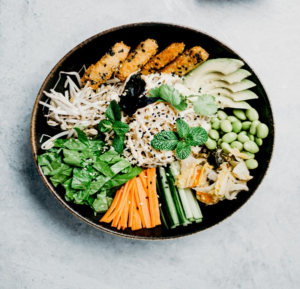
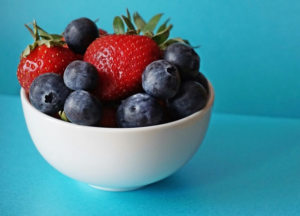
1. Eat polyphenol-rich foods. Akkermansia thrives on polyphenols — the plant compounds found in colorful fruits and vegetables, green tea, dark chocolate, pomegranate, and berries. These foods essentially act as preferential fuel for Akkermansia. A diet rich in plant diversity is one of the most consistent predictors of higher Akkermansia abundance. Grab my favorite polyphenol supplement here!
2. Prioritize prebiotic fiber — especially from diverse sources. Akkermansia is a mucin-degrading bacteria, but it also responds well to prebiotic fiber, particularly from diverse plant sources. This connects directly to the fibermaxxing concept we’ve talked about on this blog — eating a wide variety of fiber types, not just one source, is what builds a thriving, diverse microbiome where Akkermansia can flourish.
3. Reduce ultra-processed foods and added sugar. Diets high in ultra-processed foods, emulsifiers, and added sugar are consistently associated with lower Akkermansia levels and a compromised gut lining — the exact opposite of what this bacteria needs to thrive. This isn’t about perfection; it’s about trend. More whole foods, less packaged convenience food, over time.
What This Means for Your Gut Health Journey
If you’ve been dealing with chronic gut symptoms — IBS, bloating, SIBO, food intolerances — and you’ve also noticed that your mood, energy, or anxiety levels seem intertwined with your gut, you’re picking up on something real.
The gut-brain connection is not a wellness buzzword. It’s biology. And Akkermansia is one of the keystone players in that connection that we’re only just beginning to fully understand.
This is exactly why comprehensive gut testing matters so much. When I run a GI-MAP on a patient, one of the things I look at is the status of their keystone and commensal bacteria — including whether Akkermansia and other critical species are present at healthy levels. Because knowing what’s actually going on in your gut microbiome is the only way to move from guessing to targeted, effective support.
If you’re curious about what your own gut microbiome might reveal — and whether your symptoms could be connected to deeper imbalances — I’d love to talk. Book your free Gut Health Assessment at EverVital Nutrition and let’s figure it out together.
Your gut is trying to tell you something. Let’s listen.
Donna Monthei is a Registered Dietitian and founder of EverVital Nutrition, specializing in root-cause gut health testing and microbiome restoration. She works with patients nationwide via telehealth using the GI-MAP as the cornerstone of her diagnostic approach. Learn more at evervitalnutrition.com.